The trustees of Viaduct Foundation agreed that for 2022 and onward the majority of our gifts to qualified donees will go to the registered charity, TIES (officially Viaduct Technology In Education Society). In 2022, additional funding was provided to TIES and they recently provided their Impact Report summarizing the success of their projects during the year. You may visit the TIES website to read the Impact Report.
Funding for TIES will continue in 2023. The TIES initiatives in 2023 include:
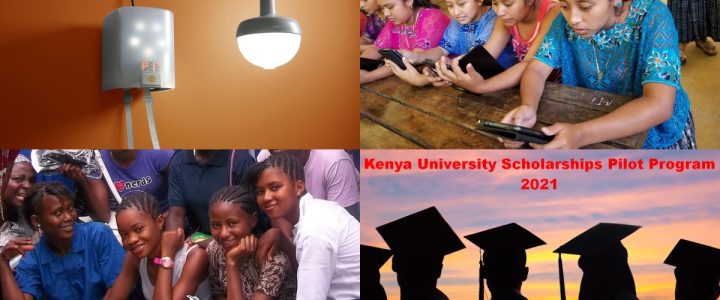
Due to the success of the Kenya University Scholarships pilot project, the program is now permanent. (https://ties.charity/projects/kenya-university-scholarships/)
TIES is expanding an expanded Sierra Leone Afterschool Program by CAUSE Canada. (https://ties.charity/projects/sierra-leone-afterschool-project/)
Our funding for the the TIES Ak’ Tenamit High School Scholarships program is ongoing. (https://ties.charity/projects/ak-tenamit-high-school-scholarships/)
From the TIES website:
Our projects are run in the least developed countries of the world in order that donations will have the maximum impact. “Least developed” means the bottom third of the countries in the world by Purchasing Power Parity, and preferably countries among those with the highest Fragile States Index.
Building upon our success with the NowLight field test in early 2021, the trustees of Viaduct Foundation agreed that for 2022 and onward the majority of our gifts will go to the registered charity, TIES (officially Viaduct Technology In Education Society).
Our projects are run in the least developed countries of the world in order that donations will have the maximum impact. “Least developed” means the bottom third of the countries in the world by Purchasing Power Parity, and preferably countries among those with the highest Fragile States Index.
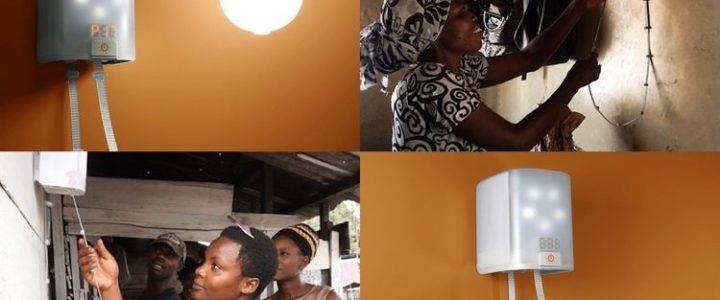
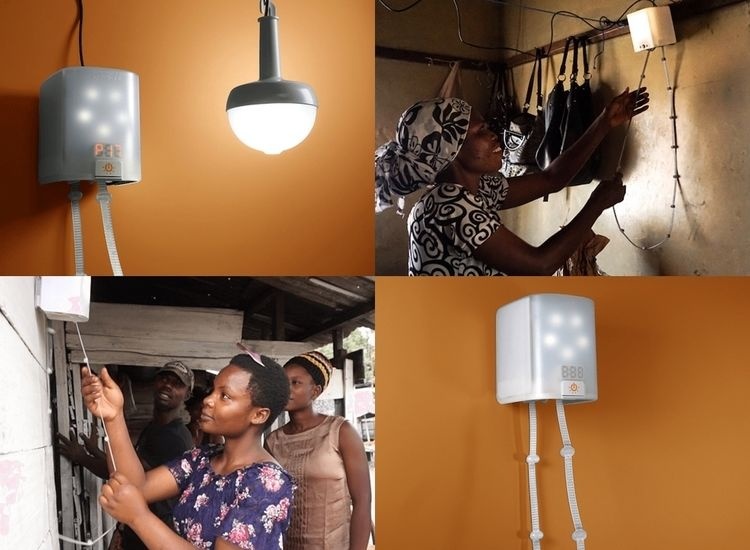
As posted on Facebook, in 2021 Viaduct Foundation funded a field test of 10 Deciwatt NowLight kits through the S.H.A.R.E. Agriculture Foundation at the request of Viaduct Technology In Education Society (TIES). (Read more about this project at TIES.charity) When TIES obtained registered charitable status in August, 2021, Viaduct Foundation provided funding for all of their new projects:
Support for indigenous girls through high school scholarships at Ak’ Tenamit School in Guatemala. (https://ties.charity/projects/ak-tenamit-high-school-scholarships/)
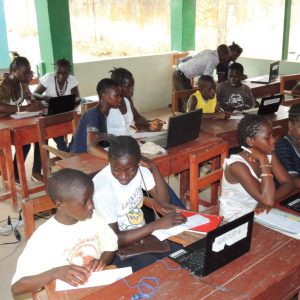
Gift of RACHEL systems and tablets to CAUSE Canada programs in Sierra Leone. (https://ties.charity/projects/rachels-to-sierra-leone-2021/)
Kenya university scholarship program for girls who would otherwise be unable to attend due to financial need. (https://ties.charity/projects/kenya-university-scholarships-pilot-program-2021/)
In late 2021, Viaduct Foundation gave additional funding to TIES to continue the projects above, and initiate new projects in 2022. Funding for TIES is expected to continue in subsequent years.
SHARE is a big supporter of the Ak’ Tenamit school (https://thegtfund.org/) in Sarstun, Guatemala. When they informed us about Guatemala’s return to school program post-COVID they told us that schools were limited to 50% capacity and that they would be assisting with remote learning. However:
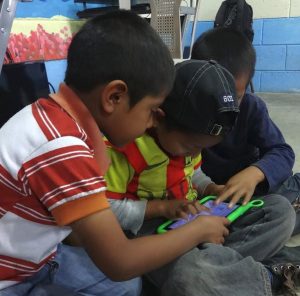
To assist with the learning, SHARE will pay for 10 tablets so learning can continue. Students do not have electricity so they will walk a couple of hours to recharge the tablets.
Since the off grid, human powered NowLight includes a USB charging port in addition to the LED light we thought that it would be the perfect opportunity to test them out in a real world situation. The kits will be picked up in Guatemala City, go by road for 5 hours, then by boat to the Ak’ Tenamit campus. From there, SHARE’s partner in Guatemala, APROSARSTUN, will walk them into the jungle for the students and families to use.
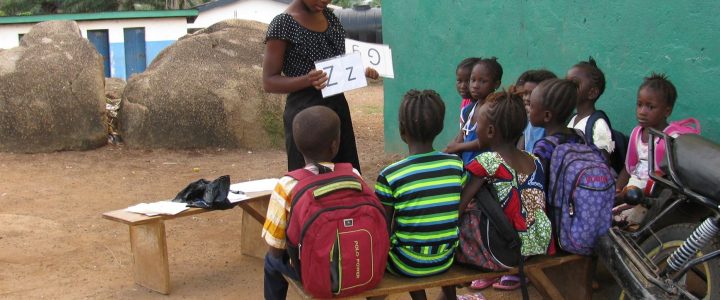
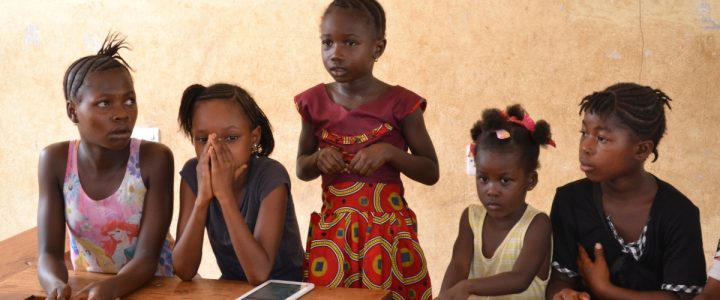
Sierra Leone Peer Literacy (image credit: CAUSE Canada)
As posted on Facebook, a new initiative in Viaduct Foundation’s 2020 funding is the support of CAUSE Canada’s Peer Literacy program in Sierra Leone.
The Peer Literacy program supports 60 girls ranging from Grade 7 to 11 by providing them with tuition fees, uniforms, shoes, school bags, textbooks, calculators and math supplies. In exchange, the girls teach first and second graders how to read for one hour each day after school. The program provides an opportunity for the girls to receive a higher level of education and develop their confidence and teaching skills, meanwhile creating role models for the younger students. Over the course of the year, the 60 girls impact over 2100 younger students!
The Peer Literacy Program has become a respected model for helping adolescent girls stay in school while also helping primary school students to improve their literacy. Primary students who participated in this program had 12% higher literacy than other students.
The Peer Literacy Program has been designed to train older school girls to be leaders in their community while enhancing their own education and that of primary-school students.
In 2019 Viaduct Foundation contributed to CAUSE Canada’s “Building Teachers’ Capacity to Provide Quality Education”. project in Sierra Leone due to the critical need to get teachers in the Koinadugu region of Sierra Leone up to minimum government standards. Due to the pandemic, when schools closed resources were redeployed to provide support for remote learning instead. As schools reopen we want to support existing programs that have a proven track record of keeping as many kids in school as possible.
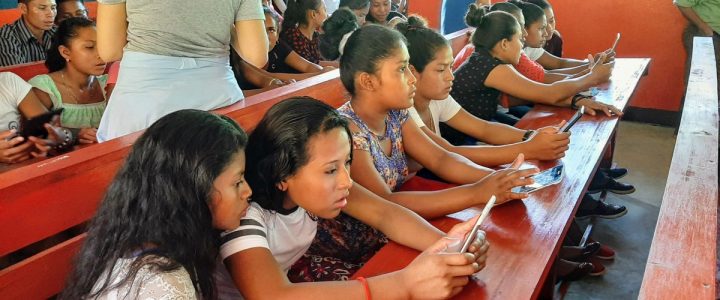
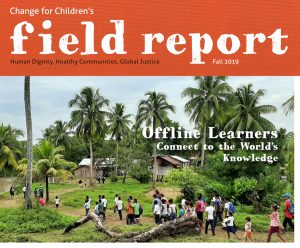
The Technology and Training for Quality and Equality Project in Remote Indigenous Communities will pilot the operation and impact of a technology-enabled, innovative, off-line training program and digital resource base in remote, indigenous communities to improve teacher capacity, the quality of classroom educational resources, and gender equality.
Photo by Change for Children
In 2019, Viaduct Foundation made a contribution to Change for Children‘s initiative, “Training for Quality and Equality Project in Bosawas, Nicaragua”. This project continues to build on Change for Children’s expertise in the use of RACHEL systems in remote areas. You can read more about this project on their website; click the image or here.
“Change for Children has been working in the BOSAWAS region for over 20 years to support health, economic development and education projects, including in the construction of secondary schools. However, education in the indigenous BOSAWAS villages continues to be the poorest in the country. This projectaims to improve the quality of education for students in one of the most remote areas of the world through innovative RACHEL technology. The project’s ultimate objective is improved quality education, gender equality, and learning outcomes for female and male students in the BOSAWAS Biosphere Reserve.”
Due to the pandemic, the implementation of this program was significantly delayed in 2020. However, in mid-2021 the program will enter the second phase (NOT the second wave!) and Viaduct Foundation will continue to support this project.
Education is one of our top priorities in the fight against poverty. It is the key that unlocks other human rights. There can be no lasting change without it. – Change for Children –
One of Change for Children’s priorities (and Viaduct Foundation’s only purpose!) is to combat poverty by improving education in some of the world’s least developed countries. “Quality Education” is UN Sustainable Development Goal #4.
One of Viaduct Foundation’s gifts in 2019 was a contribution to CAUSE Canada‘s initiative, “Building Teachers’ Capacity in Koinadugu, Sierra Leone”. Why is teacher training so critical?
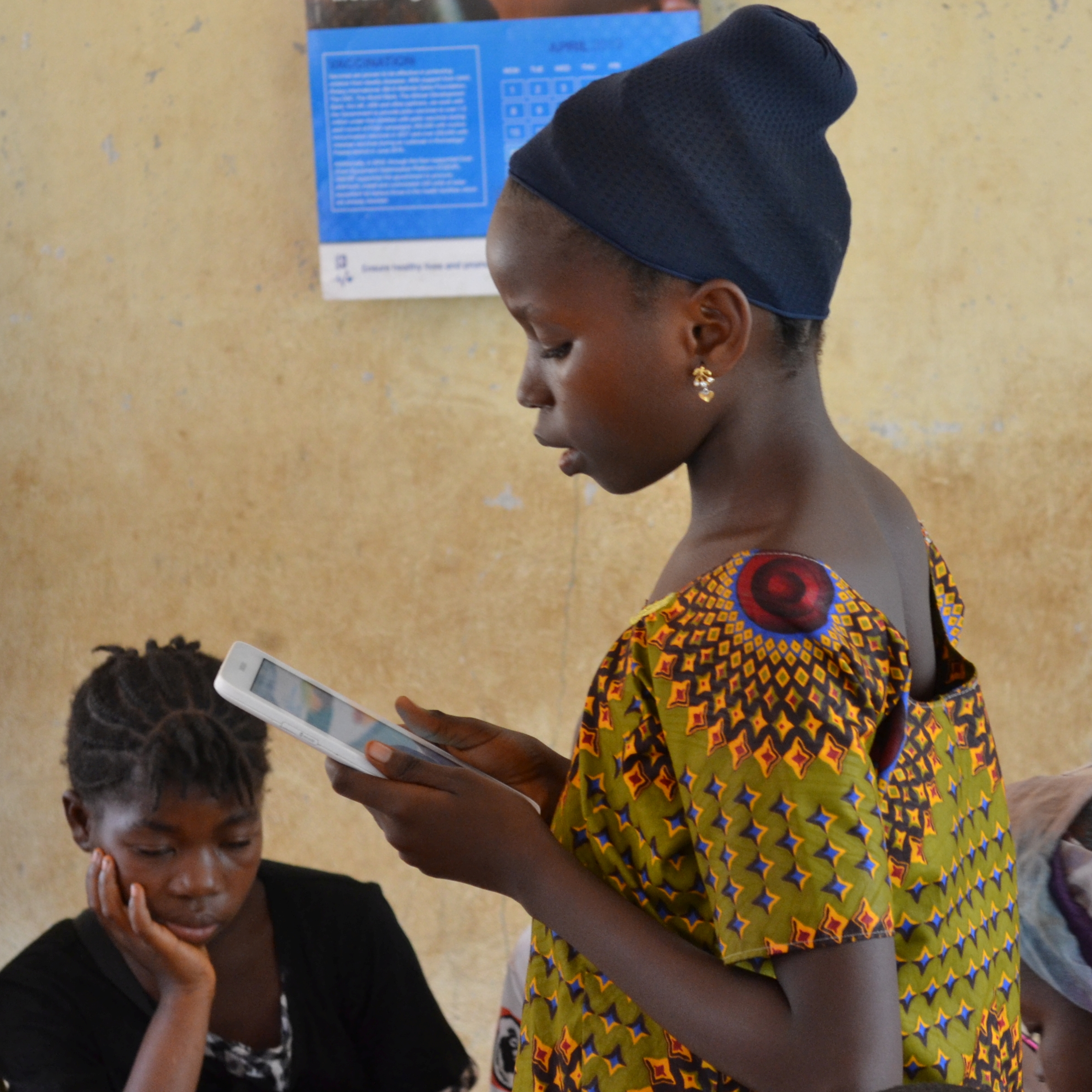
Sierra Leone student – Photo by CAUSE
“In 2018, Sierra Leone elected a new government. This government is cognizant of the poor quality of education plaguing its country and is determined to improve the quality of education. Under the new government, the Teacher Service Commission declared that all teachers must achieve level one of the new teacher standards by 2022, or they will no longer be permitted to teach. In Koinadugu, most schools are reliant on untrained teachers – known as Community Teachers – to provide education to children. While improving the quality of education for children in Sierra Leone is critical, if Community Teachers are not able to gain the skills needed and the necessary certifications to meet the these new standards, many of the schools in the region will not have any teachers and will likely close.
CAUSE Canada is presently working with 17 schools in the Koinadugu region of Sierra Leone. These schools employ close to 140 certified and community teachers. This project will build the capacity of teachers to provide the foundations of literacy and numeracy to their students, recognizing that children are more likely to succeed in school when they develop a strong foundation in literacy and numeracy skills.”
The shift to quality education from access is certainly one that I am in agreement with but it would be terrible if schools needed to close because teachers didn’t meet the qualification requirements. – Wendy Fehr – Executive Director, CAUSE Canada
Annual Report excerpt – Photo by CAUSE
CAUSE Canada has been working in communities in Sierra Leone for many years; click the image to read an excerpt from a recent Annual Report describing their work in education. And they are experienced in using RACHEL systems to provide education opportunities to areas without internet access (in fact without even electricity!).
If you’d like further information or feel inspired to donate, please contact us.
As posted on Facebook, Viaduct Foundation’s major gift in 2018 was a contribution to the Chatham Rotary Club’s initiative, the “Barillas RACHEL Digital Library Project”. So what is RACHEL?
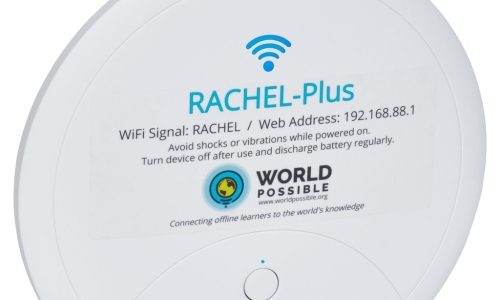
RACHEL, the Remote Area Community Hotspot for Education and Learning, is a combination of freely available software and content modules that makes it easy to bring online educational materials into places with limited or no internet access. The content is available in multiple languages and can be customized to suit local needs.
RACHEL systems deliver an entire digital library to up to 50 users at a time, and all that is needed to access the content is a computer, tablet, or smartphone with wifi.
The tiny RACHEL server uses minimal power; in fact a Montreal-based foundation, 60 Million Girls, has developed a Mobile Learning Lab consisting of a RACHEL and 30 tablets that is completely solar powered using 3 solar panels and batteries.
RACHEL is an amazing tool particularly for kids in rural, isolated areas. Our evaluation projects show important increases in learning outcomes for children and continued enthusiasm in attending – even after several months. — Wanda Bedard, President, 60 million girls Foundation
The Chatham Rotary Club has partnered with 6 other clubs and with Mundo Posible to place RACHEL servers and Chromebooks in 55 schools in Barillas, Guatemala over the next 3 years. Viaduct Foundation has funded 100 tablets to go to the schools in the first year of the project so more kids can get connected to RACHEL!
And why the Barillas area? This quote from the Rotary grant application says it all:
The Barillas municipality in Guatemala’s northwest highlands has hundreds of small, indigenous villages that are among the poorest, least literate, and least healthy in the Americas. The state barely provides them with tools to study – just notebooks, pencils, pencil sharpeners and erasers – and even then, these materials arrive late in the school year, i.e in March or April. (The school year in Guatemala is from January to October.) The schools do not have text books, reading books, computer equipment nor other teaching aids. Needless to say, these villages do not have access to the Internet nor do they have the necessary funds to establish any kind of electronic connection with web servers. While access to electric power is a notable recent advancement, these communities do not have resources to improve the education of their children.
If you’d like further information or feel inspired to donate, please contact us.
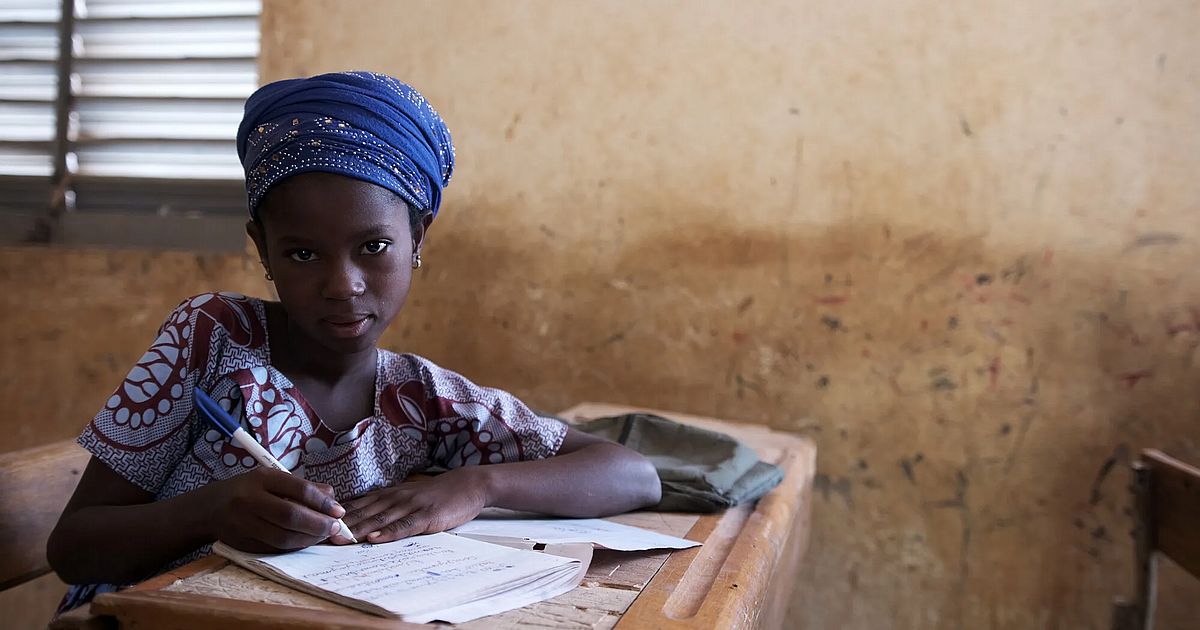
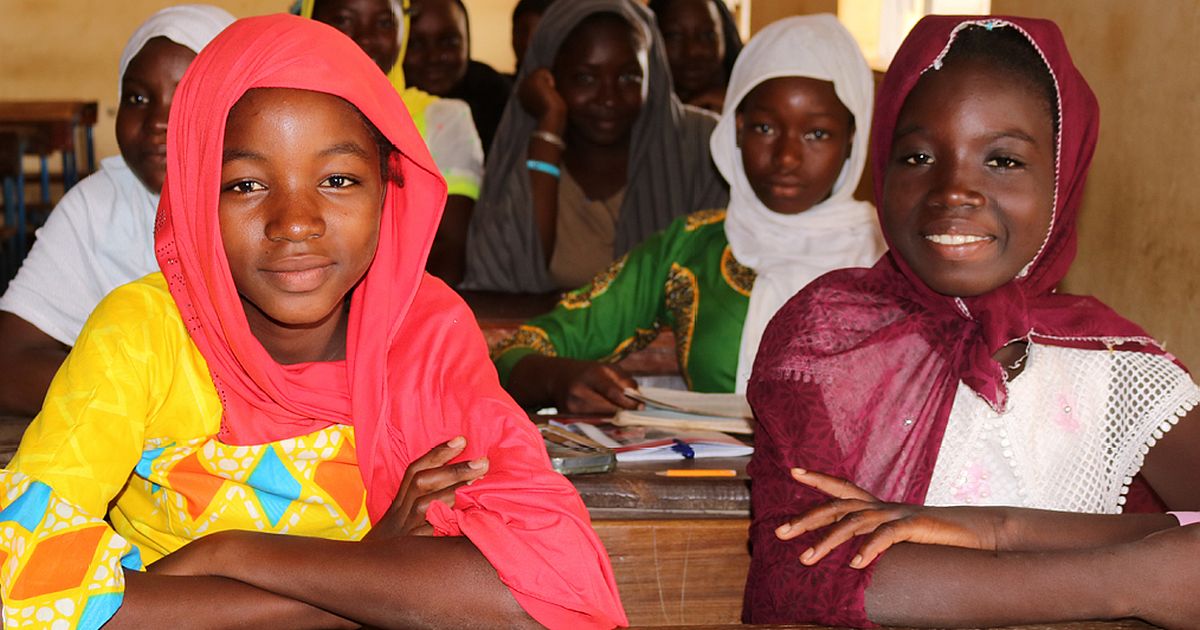
Girl in Burkina Faso Classroom (image credit: Plan Canada)
As posted on Facebook, Viaduct Foundation’s major gift in 2017 was in support of Plan International Canada’s project “Second Chance Schools” in Burkina Faso. Our gift was matched 6:1 by Educate A Child!
From Plan International Canada’s website:
“With a particular focus on girls, this gift provides accelerated learning to children who have been out-of-school so they can get up to speed with their studies and head back to a regular classroom in just nine months. An integrated public awareness campaign will focus on the importance of all children’s right to education, and help shift mindsets around girls’ education. Community partnerships and involvement will ensure local support for the program to help students re-integrate into the regular school stream.”
This gift gets girls and boys back on track so that they can build a strong future.
Plan International Canada is fortunate to have the backing of “Educate A Child”, a global initiative launched by Her Highness Sheikha Moza bint Nasser of Qatar, which aims to significantly reduce the numbers of children worldwide who are missing out on their right to education.
The chance of an education is a chance to escape poverty, to improve health and to enhance opportunities.
For complete background and all the details CLICK HERE
In 2016, Viaduct Foundation built upon our 2015 gift to the “Help Build a School in Mali” initiative by contributing to Plan Canada’s “Accelerated Learning in Mali” project. This initiative was designed to address one of the most urgent challenges in advancing education in developing countries: helping children who have missed years of schooling catch up and reintegrate into the education system.
Addressing Educational Gaps in Mali
In Mali, many children face barriers that prevent them from attending school regularly. Poverty, conflict, and limited infrastructure can interrupt or completely halt a child’s education. As a result, thousands of children fall behind their peers or never enter the classroom at all.
The “Accelerated Learning in Mali” program offers a second chance. It provides condensed, high-quality education that enables out-of-school children—often girls and frequently older than typical primary school students—to quickly gain foundational literacy and numeracy skills. This approach helps bridge the gap and prepares them to transition into formal schooling or vocational opportunities.
Salimata, pictured above, is just one example of a girl in Mali who was able to re-enter the education system . Her entire family was displaced by civil warfare, but after resettling she is in school again, although at age 12 she was just in Year 3 of primary education.
What Is Accelerated Learning?
Accelerated learning programs are specifically designed for children and youth who have missed part or all of their early education. Rather than placing them in classes with much younger students, these programs:
Deliver a streamlined curriculum focused on core subjects
Use age-appropriate teaching methods
Create supportive environments that respect the learners’ experiences
By compressing several years of schooling into a shorter timeframe, students can regain confidence and continue their education on a more typical path.
A Holistic Approach to Education
One of the strengths of Plan Canada’s work is its comprehensive approach. The “Accelerated Learning in Mali” initiative doesn’t just focus on students—it also invests in the broader education ecosystem.
Community engagement: Families and local leaders are encouraged to support children’s return to school
Safe learning spaces: Classrooms are designed to be inclusive, secure, and accessible
This holistic model ensures that progress is sustainable and that communities are actively involved in supporting education.
Empowering Children and Communities
The impact of accelerated learning extends far beyond the classroom. When children, especially girls, gain access to education, they are more likely to:
Improve their future employment opportunities
Contribute to local economic development
Make informed decisions about health and well-being
For communities in Mali, these outcomes can be transformative. Education helps break cycles of poverty and builds a stronger foundation for long-term stability.
Why This Contribution Matters
Viaduct Foundation’s 2016 gift represents a commitment to creating meaningful, lasting change through education. By supporting innovative programs like “Accelerated Learning in Mali,” the foundation helped provide opportunities for children who might otherwise have been left behind.
Investing in education is one of the most effective ways to create a better future in developing nations. Programs that focus on inclusion—especially for girls who are among the most vulnerable and and who are more likely to be out-of-school—are essential to ensuring that no one is left behind.
Read more about the Accelerated Learning in Mali initiative at Plan Canada
In 2015, we were proud to continue our commitment to global education and community development through two meaningful contributions. These initiatives reflect our belief that education is one of the most powerful tools for creating lasting change—both for individuals and for entire communities.
Continuing Our CHES Student Sponsorship in Kenya
One of our most important ongoing commitments in 2015 was maintaining our sponsorship of Madeline A., a student in Kenya through the Canadian Harambee Education Society (CHES) program. Sponsorship programs like this provide consistent, long-term support that helps students stay in school and succeed academically.
Through this partnership in Kenya, Madeline has access to essential resources such as school supplies, tuition assistance, and community-based support systems. Just as importantly, sponsorship helps ensure stability—allowing students to focus on learning without the constant pressure of financial barriers.
Education sponsorship doesn’t just benefit one child; it often uplifts entire families and communities. As students gain knowledge and skills, they are better equipped to contribute to local development and build brighter futures.
Supporting School Construction in Mali
In addition to our continued sponsorship efforts, we also supported Plan Canada and its “Help Build a School in Mali” initiative. This program focuses on improving access to education in underserved regions of Mali (which is pretty much the entire country when it comes to Mali!), where many children face significant barriers to attending school.
The initiative goes beyond simply constructing classrooms. It takes a holistic approach by:
Building safe, accessible learning environments
Training teachers to deliver quality education
Promoting community awareness about the importance of schooling, especially for girls
By addressing both infrastructure and social challenges, the program helps ensure that more children not only enrol in school but continue their education over time.
Why These Efforts Matter
Both of our 2015 contributions—supporting a sponsored student in Kenya and helping build schools in Mali—highlight different but complementary approaches to improving global education.
Individual sponsorship provides direct, personal impact and long-term support
Community-based initiatives create scalable, sustainable change for entire regions
Together, these efforts reinforce a shared goal: making education accessible and equitable for children in countries where significant barriers to education exist.
Looking Ahead
Our work in 2015 was a continuation of Viaduct Foundation’s mission to support education in developing countries. Whether through empowering individual students or investing in community infrastructure, every contribution plays a role in shaping a better future.
We remain committed to supporting initiatives that break down barriers to education and create opportunities for children, especially girls, to learn, grow, and thrive.







 The
The